Showing posts with label SImon Bottery. Show all posts

Wednesday, 6 April 2011

Cautious welcome to green paper plans to simplify pensions

by Simon Bottery, Director of Fundraising, Policy and Communications

At last the coalition has published its pensions green paper, to generally positive response. Most commentators - including Independent Age - have given a cautious welcome to the plans to simplify the current system. For us, the fact that a third of today's pensioners are not claiming the means-tested element of the pension means that the current system has failed and needs reform. However we should be careful about at least two elements of the green paper.

Firstly, the very complexity of the current system is hampering attempts to understand what is proposed by way of reform. At the moment even pensions analysts are struggling to understand how the new proposals for a more generous flat rate pension can be achieved without either costing more or having some 'losers' as well as gainers. As one Conservative MP asked us, 'if cost neutral, who loses?' Or as the GMB union puts it with more hostility, 'the real question is what the government is taking away, not what it's promising to provide'.

At this stage, probably only the government itself (and particularly the impressive pensions minister Steve Webb) has the data, analytical capacity and understanding of the current proposals to answer this question, but it will become clearer. The second reason we should be cautious is that the green paper does not propose a flat rate pension outright but as an 'option' and it also suggests an alternative, which is essentially a speeding up of plans to phase out the current second pension.

Amid all the headlines about a £155 flat rate pension for all, this option has rather been overlooked. It may be, though, that the cautious heads inside the Treasury and elsewhere see this as their banker bet if the flat rate idea runs into problems.

Thursday, 24 March 2011

The mystery of IDS' flat rate pensions speech is now solved! #budget11

by Simon Bottery, Director of Fundraising, Policy and Communications

So now we know the solution to the mystery of Iain Duncan Smith's missing speech. He shelved the announcement of a flat rate pension at the Age UK conference because he didn't want to/was not allowed to steal the Chancellor's Budget thunder.

Except that the sound turned out to be not so much thunder as the vague echo of music we've already heard. Once again the government said little beyond the fact that it was considering the options, adding that any scheme would not apply to current pensioners. The figure of £140 was quoted again but without any clue as to whether this was at today's prices or some future date. So what on earth is going on? I don't pretend to know, but on this evidence you can expect the next installment to come not in any official way but as an unattributable briefing to a Sunday paper. Government by spin, anybody?

Wednesday, 9 March 2011

Officials search Whitehall for rest of Iain Duncan Smith's pensions speech to Age UK conference #af11

by Simon Bottery, Director of Fundraising, Policy and Communications

Officials are hunting all over Whitehall for the second half of Iain Duncan Smith's speech on pensions to the Age UK conference yesterday. The Work and Pensions Secretary was supposed to announce a £140 flat rate pension, heavily trailed in that morning's media. But after a promising opening to the speech, the minister simply called for an open debate on pensions reform and sat down. It is now believed that the second half of the speech was blown out of an open taxi window on the way to the conference, or was eaten by the dog, or spontaneously combusted - no one is quite sure.

Sceptics have raised other, unrealistic possibilities for the missing content. Some have said that it was spiked by the Treasury, which still isn't convinced that the proposal will cost nothing (you can see where they're coming from - administration savings are somehow supposed to pay for a 40% increase for most pensioners and a 10% increase for those currently getting the pension credit top up). Others suggest that the Chancellor loves the idea but wants to have a share of the announcement of it.

A shame. As IDS said in the half of the speech he was able to deliver, the current system is so complex that no one knows what they are going to get, which hardly encourages retirement planning. And since a third of those eligible for pension credit don't claim it, the system allows hundreds of thousands of older people to live in poverty needlessly. So the time for reform is long overdue. Looks like we may have to wait just a little longer for that speech to be found before we can see what type of reform the coalition intends.

Monday, 10 January 2011

Lancashire county council publishes scary details of cuts to its care services


by Simon Bottery, Director of Fundraising, Policy and Communications

Lancashire county council has just published its budget, outlining in detail how it plans to cut a quarter of its spending - £179m - over the next three years. For older people using care services it makes scary reading.

The direct savings for 2011 alone include:
  • £2.5m by raising the eligibility threshold for adult social care from 'moderate' to 'substantial'. The council has 3,900 people currently assessed as 'moderate' so their care is now at risk.
  • £1.5m in reducing spending on non-residential social care - a cut of up to 20% in spending on domiciliary care, day care and personal budget. Instead there will be 'greater reliance on universal, preventative and low-level initiatives', 'greater use of telecare' and more focus on 'rehabilitation, reablement and recovery services'
  • £1.5m cuts in its Supporting People programme of housing support for vulnerable adults

  • £1.85m cuts in social-care assessment and management staff costs, leading to a 'delay in non-urgent social work assessments'
  • £4.2m in increased charges for non-residential care services meaning that some people will pay between £30.75 and £53.80 per day for services that are currently costing them £5. The council estimates that the largest group of users affected will be 5,000 who will pay £11.63 more each week.

There are other savings that will have less obvious but potentially drastic effects on services too:

  • £1.5m cut from social care training

  • £7m saved by reducing the fees paid by the council to care providers. This means organisations providing social care will see their fees cut by 2 percent in 2010. The council says, surely optimistically, that this 'should not affect overall levels of service'.

The council is making cuts across the board, from environment to children's services. You can read its plans in full at http://council.lancashire.gov.uk/mgConvert2PDF.aspx?ID=1051

Across the country, other councils are gearing up to do similar things to Lancashire. Hackney Council in London, for example, is cutting £46m over the next two years. Adult Social Care is being hit by cutting drop-in centres and residential units, and day care is being reduced. Contracts for outsourced services are also being reduced. Staffing levels are being reviewed.

Not all these changes are necessarily bad. The emphasis on reablement and preventative work is welcome, while telecare has potential if the need for social contact is met in other ways. Nonetheless, it has been hard to see this as anything but a major reduction in service provision. For all the coalition government's statements that councils have been funded to maintain social care funding, this is the reality of the average 27% cuts they face over the next four years

Happy New Year.

Monday, 1 November 2010

State pension plans: Ferrari for Christmas or coal-filled stocking?

by Simon Bottery, Director of Fundraising, Policy and Communications

Everyone can have a Ferarri for Christmas because Santa's going to be more efficient with his elves: this is what we are supposed to believe about the coalition's apparent plans on the state pension. The idea that a higher pension for all can be achieved simply by getting rid of the costs of administering pension credit is, like Santa (look away children), a fantasy. Pension credit may be expensive to administer at around £50 per person, per year, but that amount of saving will barely get you a tank of petrol, let alone a supercar. Clearly the extra money for the superpension has to come from somewhere and until we know where we should avoid the temptation to look for garage space for that Ferrari. Almost as interesting is the question of who gave the story to the Daily Mail last Monday? Lib Dems in an attempt to spread some pre-Christmas cheer (the superpension is the brainchild of LibDem pensions minister Steve Webb)? Or Tories in an attempt to prevent it?

Monday, 25 October 2010

Whatever happened to localism?

by Simon Bottery, Director of Fundraising, Policy and Communications

Localism was supposed to be one of the coalition's main drivers, but local authorities are faced with seven percent annual decreases in their grant from central government, while many central budgets have got off more lightly. The one token concession to localism in the comprehensive spending review was the decision not to ringfence the additional £1bn of funding provided for social care. Small comfort for local authorities, this. They can use it to plug the holes opening up in social care provision as our population ages (which is exactly what they should do as we await real long term proposals in July). Or they can spend it on 'non-essentials' (nb intention here is irony) like roads, children's services and refuse collection, which already face huge cuts. Damned if they do, damned if they don't.

The dilemma of council spending and social care

by Simon Bottery, Director of Fundraising, Policy and Communications


Barnet Council's budget dropped through my letterbox today (I live there, so this was not some random chance event). It has a nice pictogram, displayed above, showing how they spent their money in 2009-2010 (this image is from a screengrab so it's a bit hard to read, but you can see it in more detail at http://ideas.barnet.gov.uk/sites/barnet/files/infographic/main.html.)

It shows clearly the dilemma facing councils on social care. Though the council spent nearly £850m in 2009-10, over half of this money was either on schools or housing benefit, neither of which it has any control over because it is dictated by central govenrment. This leaves Barnet with five main areas of spending it can control: housing (£23m), environment and roads (£44m), adult social services - which is mainly social care (£112m), children's social services (£80m) and corporate services (£76m). Smaller amounts are also spent on libraries (£7m), corporate governance (£7.5m), chief executive's services (£2.8m) and commercial services (£11m).

So social care is the council's single biggest area of spending under its own control. If it simply took seven percent ofthis expenditure every year, in line with the overall cut in its funding, it would have to reduce spending on day services by £3.6m over four years; domicilary care by £7.5m; care homes by £14m and direct payments by £1.9m. In theory, it will have a share of the additional £2bn a year in funding for social care with which to offset its cuts, but it's difficult to see how this would compensate in full.

The council is running an exercise inviting residents to suggest budget savings (it's not got a huge or very constructive response yet, but it is probably early days). I haven't submitted ideas yet, but am going to take a long look at that £76m on corporate services and, in particular, the £55.3m spent on central expenses. I'm sure there's a good reason for it, but I'll want to know it's all more important than providing a carer to help a disabled older person get dressed or go to bed.

Thursday, 21 October 2010

Making sense of 'society', 'Big Society' and the state

by Simon Bottery, director of fundraising, policy, and communications

I hit a raw nerve when I asked Lord Victor Adebowale at a conference Tuesday about David Cameron's view that, 'there is such a thing as society, it's just not the same as the state'. I was expecting him to be sceptical about aspects of the Big Society. I was vainly (both senses of the word) hoping that he might like my joke that, 'there is such a thing as society, it's just not the same as Guardian Society.' So I was surprised that he refused to find any truth whatsoever in Cameron's statement. I may have misunderstood, but he seemed to be saying that in reality there was no point in discussing one without the other.

Can this really be true? If I offer to help my neighbour clear her snow away from her front door, surely that is a good reflection of society. But has it anything to do with the state? Surely not. I may want and expect my local authority to clear snow from the roads and pavements, but am I really expecting thestate to have a role all the way up to my neighbour's front door and ven inside it?

My neighbour regularly collects parcels for me that are delivered when I am out. My family regularly feeds her cat while she is away. There are thousands of acts like this every day, carried out by individuals across the UK, who never expect to be supported by the state, paid or 'capacity built'.

Of course, there are also thousands of voluntary organisations who need support, development and funding. Formal volunteering roles are not free and anyone who thinks they are will be horribly confused if funding and support are withdrawn. But we shouldn't confuse or conflate one with the other.

Friday, 10 September 2010

Big Society: what does it all add up to?

By Simon Bottery, Director of Fundraising, Policy and Communications

I only narrowly passed my Maths GCSE but for some reason I think the Cameron concept of 'Big Society' is best framed as an equation:

Volunteers +Carers x (Third Sector + state - (inefficiency+bureaucracy)) = Big Society.

For the non-mathematicians (including me) this translates as:

Big Society is the combined activities of unpaid volunteers and carers, multiplied by the actions of government and the third sector, minus their inefficiencies and bureaucracy.

I think Cameron would definitely have the equation this way around, with the actions of volunteers and carers coming first and the role of the state and the formal third sector coming second. And I think he would see the main role of the formal third sector (the bit that gets paid to be here) as a multiplier (perhaps magnifier or even facilitator would be a better word) of volunteer and carer activities, rather than as a provider of fully paid-for, contracted services like the corporate sector.

I think he shares the view of much of middle England that there is a lot of inefficiency and bureaucracy in the state sector (and perhaps in the charity sector too. We wouldn’t seriously argue with this, would we? Would we?).

A critical issue might be whether he sees the government 'x' as a big multiplier or a small one. How much positive effect does government really have on the activities of volunteers and carers? Doubling their output? Trebling it? Increasing it by only a small percentage? Is it in fact more of a brake than a boost, detracting from their effort (volunteers + carers x third sector - state = big society).

We hope to do some work on what the Big Society might mean for older people in particular in the coming months and are looking for partners. If you’re interested, let me know.

Tuesday, 10 August 2010

Older than what?

By Simon Bottery, Director of Fundraising, Policy and Communications

Went to an interesting seminar today run by the nice people at
Forster on communicating with older people. ‘Older people’ seems to have become the most common way of describing people who a few years ago would have been ‘pensioners’ or ‘senior citizens’ or just ‘old people’.


But it struck me today that I have no idea what it is that they are ‘older’ than. I thought at first it must be older than the average age but The Office for National Statistics says the average age in the UK is 39. Since no one includes 40-year-olds in the category ‘older people’ (Independent Age helps those over 70 though some organisations set the bar as low as 50) we are clearly not meaning ‘older than the average’.

So what do we mean? Older than me? Older than you? Older than the age a typical police officer looks? I have a terrible suspicion we mean ‘old’ but are saying older’ because it sounds nicer.

photo posed by model, courtesy of hortongrou at www.sxc.hu

Friday, 6 August 2010

Mayor Boris Johnson clowns around at London Older People's Assembly; Pensions Minister Steve Webb gets serious

Simon Bottery, Director of Policy and Communications, writes:

I am not going to attempt to guess what Pensions Minister Steve Webb was thinking yesterday when he was publicly chastised by Boris Johnson during the annual London Older People’s Assembly at City Hall.

Along with a few hundred other people, I sat and watched as Boris demanded to know whether the minister had arrived for the meeting by public transport and then, on ‘discovering’ that he had not, roundly condemned him for it. With that, and few well chosen jokes about Ken Livingstone, Boris was off, leaving Webb to fume alone.


Boris Johnson at another event, with a model of his favourite bus
photo by Jerry Daykin from Wikimedia Commons

Webb opted to stay and face the questions of a lot of active, and in some cases angry, older Londoners. In fairness he did a decent job of it (though he was never asked the question that Lizzie Irons of Citizens Advice later posed: how many older Londoners will have to move when the coalition government’s cap on local housing allowance comes into force next year?). He also announced an ‘Ageing Well’ initiative, which aims to encourage local authorities to share best practice in providing for older people in their communities.

You can read more about the London Older People's Assembly Group at
their website.

Monday, 12 October 2009

It's a bird...it's a plane...it's Maggie, the 90-year-old skydiver!


by Simon Bottery, Director of Fundraising, Policy and Communications

I drove up to Northants on Sunday to witness the remarkable Maggie White leap out of a plane at 12000 feet to celebrate her 90th birthday (and raise money for Independent Age and another charity).

She was inspired to do it, said her relatives, because a friend in her 70s had done it. That's the thing about older people, easily influenced... Thank you Maggie.

You can read more about Maggie's skydive from the Hereford Times.

Tuesday, 6 October 2009

Perverse incentives


by Simon Bottery, Director of Fundraising, Policy and Communications for Independent Age

I have now been to three fringe meetings in two days at the Conservative party conference where speakers talked about 'perverse incentives'. This means accidentally encouraging people to do something other than what you intended and is being discussed in relation to the new Conservative proposal on social care.

Basically, this involves people paying £8000 when they are 65 and in return having the cost of any residential care covered. Since typically most people don't need to go into a care home, and only stay a couple of years on average if they do, the scheme will pay for itself, say the Conservatives. That seems fine, say the critics, but in reality people who pay the guarantee are more likely to expect to need care and will be more likely to go in earlier if they do- after all, they've already 'paid' for it. So the scheme creates a perverse incentive to use a home.

This and other issues like it are bound to be debated for some time, which is great as we do need social care to be high up on the party political agenda. But it does occur to me that currently for many people the incentive, perverse or not, is to stay at home if at all possible. An older person with care needs will not have to sell their home to pay those costs if they are living in it but may have to if they have moved out. Of course that's fine if they do want to stay at home (as most people say they do). But what about those who want to move into a home? The urge to safeguard the family home, perhaps to pass on to children, may create a determination to stay put no matter what the cost to themselves and their welfare.

Thursday, 1 October 2009

How The Clash are helping are helping raise money for older people


by Simon Bottery, Director of Policy and Communications for Independent Age

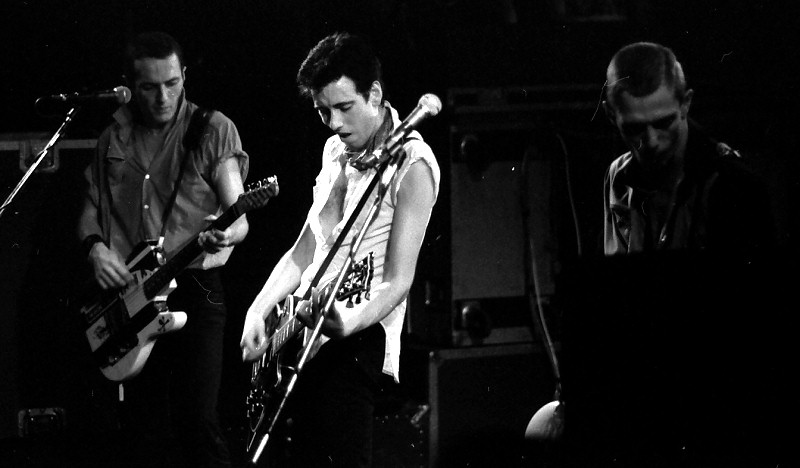
Clash lead singer Joe Strummer may have died young but he is helping me complete a sponsored ‘virtual’ bike ride to Paris to raise money for Independent Age. The deal is that all five members of the management team here take turns on an exercise bike to clock up the 213 miles needed to get us to Paris. That means around 10 miles a day each. For those of us not used to cycling (that’s me) this is fairly hard work but I have discovered that the best way of putting in the miles is to listen to something stimulating on an iPod. I’ve experimented with various types of music and can exclusively reveal that loud and fast music from the late 70s and early 80s is easily the best to cycle to. I may however switch over as we get closer to our destination. Somewhere on my iPod I have a compilation of French songs from the 40s and 50s so I will give up punk for Piaf as I ‘reach’ the outskirts of Paris at the end of the week. You can support me at www.justgiving.com/simon-bottery

Friday, 25 September 2009

The potential battle over meals on wheels


by Simon Bottery, Director of Fundraising, Policy and Communications for Independent Age

By coincidence, I heard this week from the chief exec of the organisation that invented meals on wheels and, the next day, from a council that has just scrapped them. WRVS is one of those charities that emerged from government just before the second world war and is now seem as something of a national institution. Its impressive chief executive, Lynne Berry, is busily completing the transformation of the organisation from a vast conglomerate of disparate services to a more focused, directed body. But they still deliver millions of meals on wheels to elderly people each year.

Sue Warr is an (also impressive) manager in Dorset County Council, tackling social exclusion among older people. Dorset has a lot of older people: over 700,000 - well over one quarter of its population (apparently in Christchurch there is a saying that people retire to Christchurch to die and then forget what they came for). Only 189 of them use meals on wheels so the council has a new ‘access to food and nutrition’ project that aims to help more people. Those currently getting meals on wheels will get individual help to identify other ways of getting food and meals.

Dorset clearly takes older people’s issues seriously and Sue described some brilliant work to prevent and deal with social exclusion and loneliness among older people. So Dorset may well be right to think that there are better ways of providing food and nutrition to older people in the county. But I can’t help wondering whether at least some of the 189 people getting meals on wheels were actually very happy with what they were getting and wanted it to continue. It would be reassuring to know that they are happy with the new arrangements. More worryingly, will we see other councils scrapping services such as these to save money, without going to quite the lengths of Dorset to see that the existing service users get a good alternative?

Tuesday, 22 September 2009

Social care: an opportunity for politicians to improve their image?


by Simon Bottery, Director of Fundraising, Policy and Communications for Independent Age

Yesterday I was at the Liberal Democrat conference in Bournemouth for a fringe meeting on social care. Several charities are running these at all the party conferences as part of a bid to make social care a major issue at the next election. It will not be, of course, and most of the speakers seemed resigned to that. It will be health and education - it always is, said Helen Coombs from Ipsos Mori. It will be unemployment, said Baroness Barker, the Lib Dem health spokesperson in the Lords. Social care might just sneak onto the agenda if we work very hard, but if it does not then what happens given that no one can be bothered to put up even the flimsiest defence for the current system? Is it too much to hope that politicians might be prepared to put aside differences and reach a solution, a compromise if necessary, that carries all-party support? Baroness Barker said she hoped there could be an all party 'settlement'. Perhaps there would be few votes in it, but such a show of acting in the national interest would at least win some plaudits from a public with a rather jaded view of politicians. I can't help wondering, though, whether the need to cut public spending generally might mean that reform of social care returns to the back burner simply because there are unlikely to be any savings in it. Quite the opposite. With Help the Aged and Age Concern saying that another £1bn-£2bn needs to be invested but parties of all sides sharpening their knives it may be the worst possible timing to achieve reform.

Tuesday, 15 September 2009

Why desperation can be a great motivator

Simon Bottery, Director of Fundraising, Policy and Communications for Independent Age writes:

I spent a day last week running two discussion groups in Eastbourne for a dozen or so of the older people we work with. We run the groups to have a better understanding of the issues facing older people, partly so that we can design our services to help them and partly so that we can try to influence the policies that affect older people.

The idea is that we run one discussion group in the morning and one in the afternoon, with both groups having lunch together. This means that as well as helping us understand issues, people get something out of it themselves. They usually say that they enjoy the events as an opportunity to meet and talk with other people. Sometimes participants end up swapping telephone numbers with people they’ve got on particularly well with.

The two groups we ran last week were about health and social activities. Most older people will have health conditions affecting their lives to a greater or lesser extent. However three of the participants, two of whom came with their spouses, had suffered sudden dramatic health. These changed their lives virtually overnight. They went from being active people looking forward to their retirement to struggling to even leave their homes. Like thousands of others they had sought out help where they could – from the health service, local authorities, charities, user groups. The described a lack of joined-up action, particularly in the gap between hospital and home care. One described a four-year struggle to get Attendance Allowance. There are no easy solutions in these circumstances but (another benefit of these sorts of groups) one participant could help another – in this case, signposting someone to a pain clinic they did not know existed.
Another participant described her frustration at being refused a disabled parking badge (after 13 years of having one) because East Sussex County Council had instigated new guidelines to crack-down on abuse of the previous system. Because this participant had honestly said she could walk 50 metres unaided (though not without a lot of pain) she could no longer have a badge. Again others in the group were able to suggest solutions – in this case applying via the GP to be classified as registered disabled and receiving a badge through this route.

The afternoon groups talked about social activities. For those who lived alone it was a real difficulty to find enjoyable ways of staying socially active. They feared, and sometimes experienced, days of being by themselves with no one to talk to. They described the cost of social activities like going to theatre as being beyond them (the discounts they receive are too small to make much difference), though they appreciated what they got for free, such as swimming and bus travel. But for many it was not just the cost but the idea of doing things alone that was so daunting (as it would be for someone of any age). I asked one woman what motivated her to get out by herself and go places. “Desperation,” she said. “If I don’t, I might not see anyone at all.”